


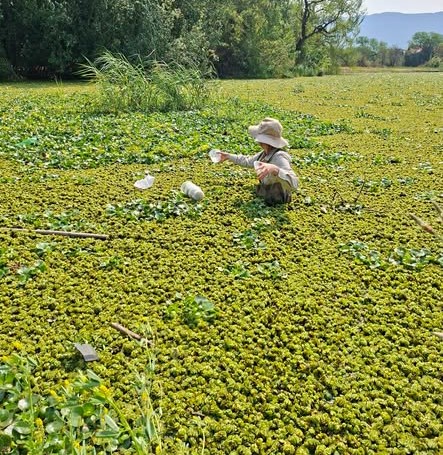
The Centre for Biological Control said a healthy population of weevils remained on the plants throughout the autumn and winter.
Approximately 80 000 water hyacinth hoppers (Megamelus scutellaris) have recently been released on the hyacinth mat to get the bug numbers up as early as possible.
“Feeding by the hoppers prevents the plants from flowering, so no new seeds are produced. Remember, we are dealing with a legacy seedbank from decades of invasion on the dam,” Dr Kelby English of CBC said.



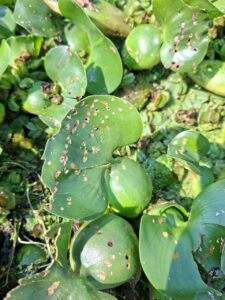
With the resurgence of water hyacinth, common salvinia growth is in decline, most likely due to competition from water hyacinth.
“Over September, we have noted a rapid decline in common salvinia density from nearly 40% cover to just 5%, while water hyacinth is increasing steadily. The most recent satellite imagery indicates that water hyacinth and common salvinia are about 50:50. The mixed mat is approximately 215 hectares.”

